Lightroom, Luminar, or Something Else? The Editing Tools Photographers Are Actually Using in 2026

Editing software has never had more options, and honestly, that’s both exciting and overwhelming. The right tool depends on your workflow, your budget, and what you actually need from post-processing. Here’s where things stand in 2026.

Adobe Lightroom Still Runs the Industry

Like it or not, Lightroom remains the standard. Its non-destructive editing, seamless cloud sync, and catalogue system make it the go-to for photographers managing large volumes of images, which is exactly the kind of workflow event photography demands. The subscription cost frustrates a lot of people, but the consistency and reliability it delivers are hard to argue with. If you’re shooting professionally, Lightroom is still the benchmark everything else gets compared to.

Adobe Lightroom Interface

Luminar Neo Is Winning Over Creatives

Luminar Neo has carved out a serious following, mostly because of its AI-powered tools. Sky replacement, portrait retouching, and atmosphere adjustments that used to take significant skill now take seconds. For photographers who prioritize creative edits over technical cataloguing, Luminar Neo is genuinely impressive. It’s not a full Lightroom replacement for heavy-volume work, but for stylized, artistic results, it punches well above its price point.

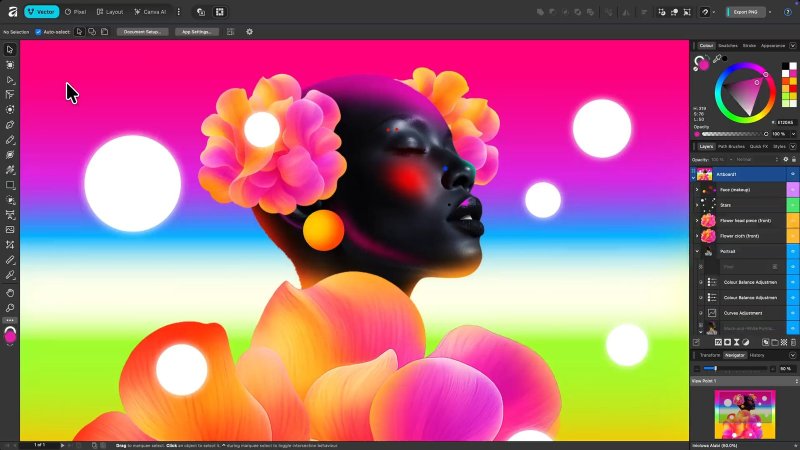
Affinity is a free alternative to photoshop.

The Alternatives Worth Knowing

Capture One is the choice of commercial and studio photographers who want the absolute best in color grading and tethered shooting. It’s powerful, precise, and has a steeper learning curve, but the output quality speaks for itself. On the free side, Darktable is a surprisingly capable open-source option for photographers on tight budgets, and Affinity Photo remains one of the best one-time-purchase alternatives to the Adobe ecosystem.

The tool matters less than the eye behind it. Software doesn’t create a strong edit; it just executes the vision the photographer already has. A poorly composed, badly lit image won’t be saved by any of these programs, no matter how advanced the AI gets. That’s why post-processing at Vivid Focus Photography starts long before the editing suite. It starts with getting the shot right.

Every image we deliver across the Greater Toronto Area, Kitchener, Waterloo, Cambridge, and Guelph goes through a deliberate editing process built around consistency, natural skin tones, and making sure the final gallery actually reflects how the event felt, not just how it looked through a lens.

Curious what a fully edited, professionally delivered photo gallery looks like? Reach out to Vivid Focus Photography and let’s talk about capturing your next event the right way, from shoot to final edit.